


Bali
Magical Bali is home to the Relax Bali resort, which will be your support as you explore the beautiful "Island of the Gods".
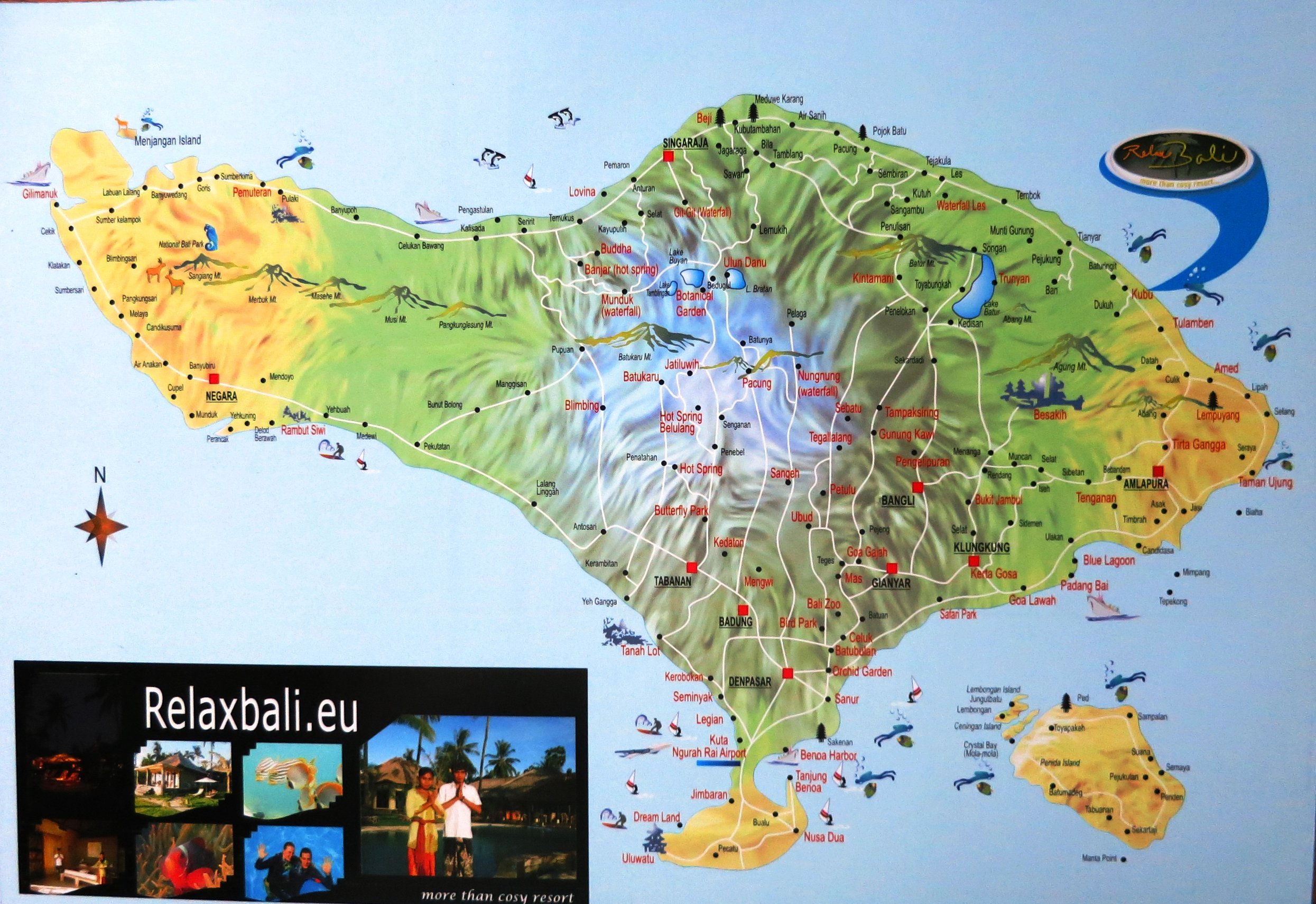
Bali is part of a 5,000-kilometer-long chain of the Indonesian archipelago, made up of more than seventeen thousand islands. The island of Bali lies 8° south of the equator in the Lesser Sunda Islands, between the islands of Java and Lombok.
From east to west, the island is about 153 km wide, and from north to south it's about 112 km. Its area is 5,632 km². The highest point is the active volcano Mount Agung (3,142 m above sea level). Mountains cover the center of the island and extend to the eastern side. Bali’s coastline offers 400 km of beautiful beaches, washed by the waters of the Indian Ocean. The capital city of Bali is Denpasar, with nearly one million inhabitants, located in the southern part of the island.
Weather in Bali
Thanks to its equatorial location, Bali enjoys a tropical climate year-round with average temperatures around 30°C. From early December to the end of February, the island experiences the so-called wet season. In practice, this means it remains very warm, but there's a higher chance of rain showers. From March to November comes the dry season, which is sunnier, although occasional showers can still occur. Temperatures on the coast are always higher than in the mountainous interior.
Time in Bali
Compared to the Czech Republic, Bali is 7 hours ahead in winter and 6 hours ahead in summer.
Population of Bali
Although most Europeans imagine Bali as a small island, the current population exceeds 4 million inhabitants. The majority are Indonesians, but in cities you can also come across Chinese and Indian merchants. The number of Western tourists settling permanently in Bali is steadily increasing. Population oversight is one of the Indonesian government's priorities, which has launched a family planning campaign with the slogan “Two is enough.” This governmental program appears to be successful, as young families now typically have 2–3 children, whereas older generations often had up to 9. Most of the population lives in the southern and southeastern parts of the island, which are also the primary areas for tourism.
Although Islam is the dominant religion in Indonesia, around 90% of Bali’s population practices a distinct branch of Balinese Hinduism. Muslims account for around 5% of the population, a number slowly increasing due to incoming labor from the neighboring islands of Java and Lombok. Around 1% of the population practices Christianity or Buddhism.
Cuisine in Bali
Indonesia is renowned for its cuisine, which reflects the influence of traditional local cultures: Muslim and Hindu. The staple food is rice, which locals eat with every meal, including breakfast. The national specialty is a dish similar to Spanish paella: nasi goreng, fried rice with vegetables, meat, egg, and various spices. Popular side dishes with rice include various types of curries—meat or vegetables in aromatic sauces. Another local specialty is roast suckling pig (babi guling). Indonesian cuisine traditionally uses a lot of spices and hot ingredients (garlic, chili, ginger), so if you’re not a fan of spicy food, be sure to let the staff know.
A separate highlight of the local menu is fish and seafood, which are always fresh and delicious in Bali. Hotel complexes often have a dedicated restaurant serving only seafood dishes.
Drink prices in shops are quite similar to those in the Czech Republic, though beer and alcoholic beverages tend to be more expensive. Restaurant prices are also comparable to those in the Czech Republic, except for fresh fruit juices, which are significantly cheaper.
Opening Hours in Bali
Bali follows a standard workweek from Monday to Friday. Offices and banks are open from 9:00 AM to 3:00 PM. On Fridays, working hours are shortened until 1:00 PM. They are closed on weekends. Minimarkets, gas stations, and street food stalls—called warungs—are typically open 24/7. Street exchange offices often operate on weekends as well. Restaurants and hotel bars are usually open until 11:00 PM, while city bars and clubs can stay open until morning.
Import of Goods and Customs Regulations
Indonesian law prohibits the import of weapons, drugs, pornography, and certain fresh foods. Drug trafficking is punishable by death in Indonesia! Avoid local dealers who may offer you drugs in nightclubs—these are often undercover police officers.
Duty-free allowances include 200 cigarettes (or 50 cigars or 100g of tobacco), 1 liter of alcohol, and a small amount of perfume per adult person. Official rules allow customs officers to inspect brought-in electronics and media (CDs, DVDs, flash drives), though we have no reports of travelers being subjected to such thorough checks. There are no limits on importing foreign currency, but there are restrictions on exporting Indonesian rupiah. We recommend checking current customs and declaration regulations before traveling.
Currency in Bali
The official currency of Indonesia is the Indonesian Rupiah (IDR, Rp). Money can be easily exchanged at the airport or in major cities and hotels. Banks and ATMs are available in almost every town. Credit cards such as American Express, Diners, MasterCard, and Visa are accepted. It’s also possible to pay unofficially in US dollars, though only for small transactions without a receipt (e.g. renting snorkel gear or a private boat trip to a nearby island). The approximate exchange rate is 1 USD = about 15,000 Rp, but the rate is very volatile.
Languages in Bali
The official language is Indonesian (Bahasa Indonesia), which is based on an adapted and expanded version of Malay. Locals in Bali speak a native Balinese dialect among themselves, which differs from the official Bahasa. Similarly, people on Lombok use their own dialect in addition to the official language. In tourist areas, however, you can communicate easily in English. You might even be approached by locals wishing to have a casual conversation in English. Often, these are students of language or hospitality schools who have mandatory English conversation practice and prefer speaking with tourists over practicing with each other. You have every right to politely decline, but you might also take the opportunity to ask about local life, sights, good restaurants, or interesting trips. Many of these students are well-informed and will gladly share stories about a nearby temple or the Balinese child-naming system, without expecting anything in return. Many people working in tourism also speak Japanese or know the basics of other Asian languages.
Health in Bali
No special vaccinations or prophylaxis are required for travel to Bali. The most common health issues tourists face are usually due to underestimating the local climate: overheating, dehydration, heatstroke, or injuries from careless physical activity. Sensitive individuals should be cautious with air conditioning — the same rule applies in Indonesia as in the Czech Republic: the difference between outdoor and indoor (or car) temperature should not exceed 6°C. Use of insect repellent is recommended, as mosquito bites tend to swell and heal more slowly in the hot, humid climate. There have also been occasional cases of Dengue fever reported in Bali.
If you experience minor health issues, basic assistance can usually be requested directly at hotel receptions. They can also help contact local medical professionals. Public hospitals are located only in the capital, Denpasar, but tourists are advised to seek private clinics for a higher standard of care. Payment for medical services is usually required in cash, and expenses can be reimbursed by your insurance company in the Czech Republic upon submitting proper documentation, depending on your policy.
Transportation in Bali
Driving in Bali is on the left side of the road. The official speed limit is 40 km/h in towns and 70 km/h outside urban areas, although traffic rules are generally quite relaxed. Public transportation has a limited network and, aside from shuttle buses between hotels and shopping centers, it is irregular. If you plan to rent a car or motorcycle, you’ll need to present an international driver’s license at the rental agency. Due to the challenging navigation and local driving habits, we recommend using taxis or hiring a car with a driver, who can also act as a guide. This option is often cheaper than renting a car. You can agree on the fare in advance or ask the driver to use the taximeter.
Clothing in Bali
Due to Bali’s year-round high temperatures, pack lightweight, breathable clothing and a hat for sun protection. If you're heading inland, bring a long-sleeved top for the evenings. If you're planning a mountain hike to watch the sunrise, be prepared for nighttime temperatures around 12–15°C. Don’t go without sturdy shoes, a raincoat or light softshell jacket, and an extra T-shirt. While you might see villagers bathing nude in rivers in rural areas, don’t try to turn public beaches into nudist zones. Topless sunbathing is accepted on tourist beaches, but for less crowded spots and especially on Lombok, we recommend wearing a full swimsuit.
Electricity in Bali
Indonesia uses alternating current with a voltage of 220 V and standard round European sockets with two holes. Unless you're planning an independent trekking trip into the interior of Lombok, you can expect a reliable electricity supply.
Etiquette in Bali
- Balinese people are very tolerant, but due to cultural differences, a foreigner may unknowingly commit a faux pas or even cause offense.
- Never try to touch anyone on the head – Balinese believe the head is the seat of the soul, and thus it is considered sacred.
- When handing something to someone, always use your right hand. The left hand is used for personal hygiene in the region and is considered unclean.
- Take off your shoes before entering a temple or someone’s home.
- When speaking with someone, don’t place your hands on your hips. This gesture traditionally signifies aggression or confrontation (you can see this in traditional shadow puppet performances).
- When hailing a taxi, don’t raise your hand high; instead, gesture subtly toward the spot where you want the driver to stop.
- If you start a conversation with locals and they ask about your family, it is polite to ask about theirs in return.
- Generally speaking, locals enjoy chatting simply to ensure you feel comfortable and well.
- If someone offers you services you’re not interested in, a polite and firm refusal is enough. Unlike in Thailand, there is no harm in saying, “I’ll think about it until tomorrow.”
Important Numbers and Contacts
In addition to your passport number and electronic flight ticket (we recommend making a copy), it’s important to keep handy the contact information for the Czech diplomatic mission and the 24/7 assistance line of your insurance company.
Police: 110
Fire Brigade: 113
Medical Emergency Service: 118
Relax Bali Resort with Czech representative – Indonesia: +62 811 619 69 733, +62 811 3939 733
Relax Bali in the Czech Republic: +420 602 344 534, +420 608 925 000
Shopping and Souvenirs in Bali
Many tourists visit Bali specifically for shopping. If you're looking for brand-name items, you'll find them in Kuta, which we also visit. Handcrafted goods and art galleries are located in and around Ubud. Shops have fixed prices, but bargaining is common in stalls and markets. Remember, the price initially quoted by a vendor can often be bargained down by up to half. Popular small souvenirs from Bali include painted wooden masks and puppets from traditional theatrical plays. When purchasing larger works of art, keep in mind the luggage weight restrictions for your return flight.
Tipping in Bali
Sometimes restaurants automatically include around 10% service charge, which is indicated in the menu. If no service charge is added, it is customary to leave about 5% if you're satisfied with the service. The process is different from the Czech Republic: you pay the bill, receive the exact change back, and then leave a tip from that amount as you see fit.
Carrying luggage from the reception to your room, from the airport to the bus, etc., is not included in the accommodation price. It is polite to tip 1 to 2 dollars per bag per service — or you can carry your luggage yourself.