

Our Favorite Dive Spots
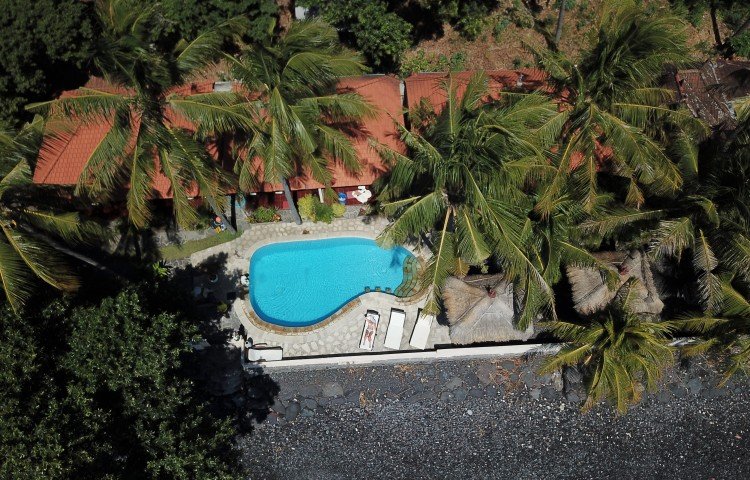
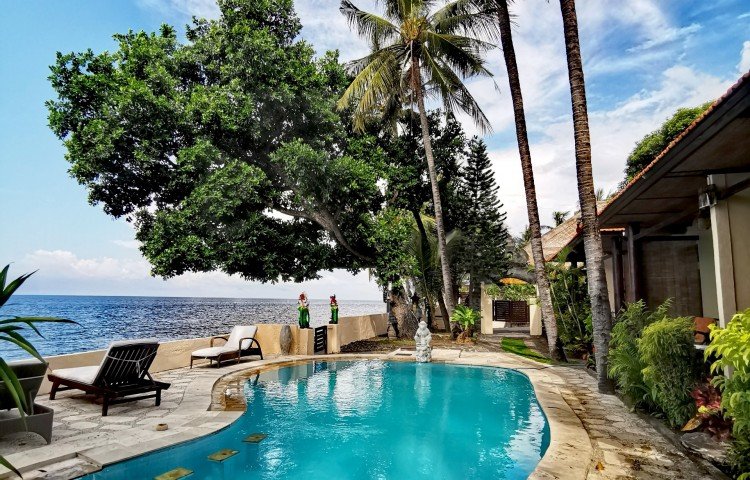
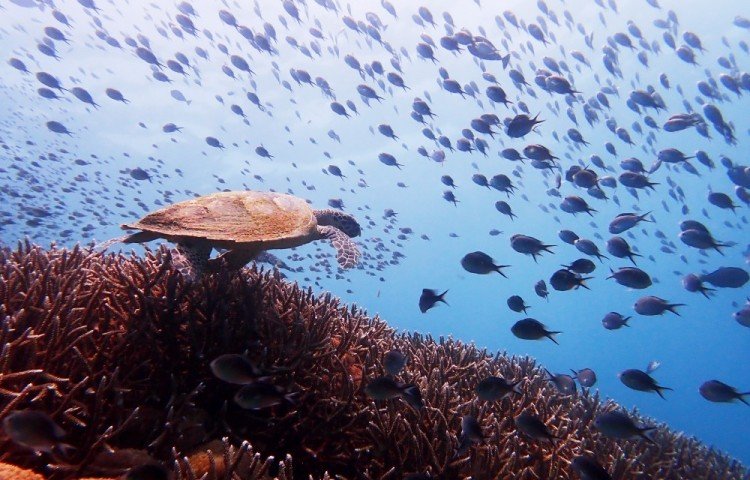
This dive site is located directly in front of our resort. Diving in Bali is mostly shore-based, and here we use our pebble beach, which transitions into coral areas ranging from 3 to 80 meters deep. Starting at 20 meters, large lava formations covered in coral descend into the depths, where you can encounter white-tip sharks, sweetlips, schools of large trevally and barracuda, as well as moray eels. Observant divers will also spot cleaning stations with shrimp, leaf scorpionfish, and stonefish. During night dives, the Spanish dancer nudibranch and large feather stars hunting with their tentacles put on a show. This site is suitable for all divers and is accessible from shore at any time, day or night. The house reef, with its profile, is excellent for snorkeling, beginner divers, and experienced divers alike.
TULAMBEN
Tulamben is now probably the most famous diving site on Bali. The entire northeast Bali area is renowned for the safety of its sites, water temperatures ranging from 27 to 30°C, pebble beaches made of volcanic rocks, and a black volcanic seabed. Photographers especially love this dark backdrop, as it enhances the vivid colors and sharpness of all their subjects. However, it is quite different from diving on bright, sunlit coral reefs with white sand. Visibility commonly reaches only 12 to 15 meters, but this drawback is more than compensated by the vast diversity of fish and invertebrate species abundant in these waters. Diving here began developing back in 1979 when the first visitors discovered the rich underwater life around the Liberty wreck. The best diving conditions are usually from late April through July. In August and September, southeast monsoons bring bigger waves, which can make diving more challenging. However, by late September, conditions improve, the water calms, and ideal diving conditions return. A delightful surprise for many is the group of local porters who daily carry, with a smile, two complete sets of diving equipment balanced on their heads, strapped to tanks, and transport them to the desired dive sites. The weight of the equipment often exceeds the porter’s own weight, but that seems to be of little concern here. The vast majority of tourists experience their first dive on the Liberty wreck, which they immediately fall in love with, but over time most realize that there’s much more than Liberty—other sites are equally rich and fascinating.
The LIBERTY Wreck
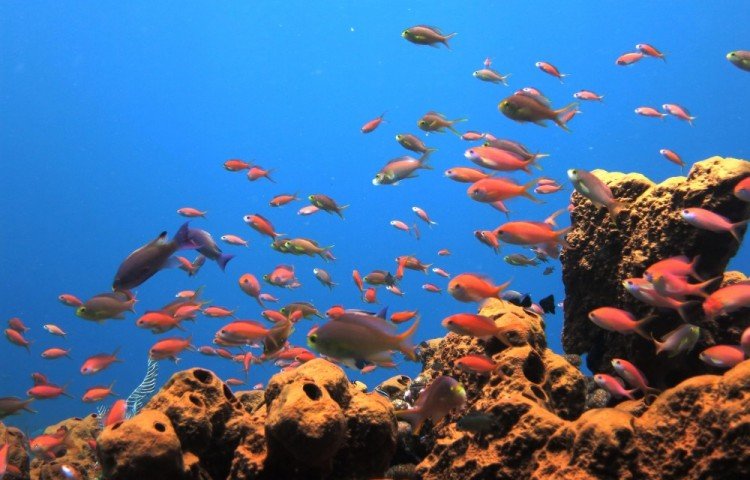
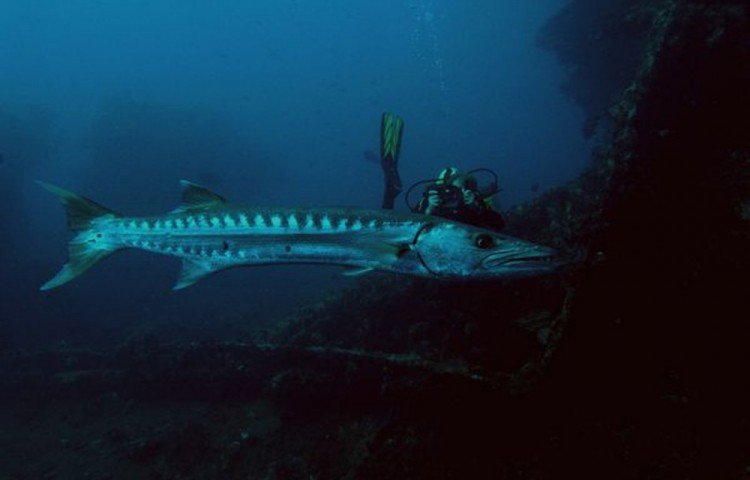
From the black pebble beach, you enter a shallow area where stones at about five meters give way to a flat sandy bottom, already surrounded by schools of fish. This approximately 120-meter-long wreck of an American supply ship lies about 20 meters from shore at depths ranging from 3 to 35 meters. Its journey ended here in 1942 when it was torpedoed by a Japanese submarine while en route to the Philippines. After unloading its cargo, the Liberty rested beached until 1963, when the eruption of Mount Agung and subsequent tremors and earthquakes shifted the ship into deeper water. Don’t expect a spooky wreck—what remains today resembles a natural coral reef more than a man-made structure. Over the years underwater, the wreck has become a natural sanctuary for an astonishing variety of corals and marine life. Schools of trevally, snappers, batfish, angelfish, and large barracudas, along with the extensive size of the wreck, ensure you’ll want to dive here multiple times. The wreck is exceptionally beautiful at night, and many of our guests claim they have never experienced a better night dive than on the Liberty. Even while on vacation, it’s worth getting up early one day to experience the wreck at dawn. At that time, schools of about twenty sweetlips and large trevally are not yet scared off by the crowd of divers and richly reward your early rising. Macro life enthusiasts will find an inexhaustible treasure trove of tiny creatures such as pygmy seahorses, nudibranchs, scorpionfish, decorator crabs, leaf scorpionfish, and fan worms. This site is truly a paradise for all divers and snorkelers alike.
SUNRISE
Directly in front of the resorts in Tulamben lies an amazingly rich coral garden (5 – 20 meters deep), where you’re sure to encounter small black-tip sharks, beautifully colored parrotfish, anemones with their clownfish, sand eels, and yellow-and-blue moray eels. Divers of all skill levels can enjoy the wonders of this garden, and its charm and shallow depth are especially appreciated by experienced divers after a deeper dive. It is also one of the most popular spots for snorkelers.
DROP OFF
A bit of adrenaline is sure to course through your veins at the sheer wall with a slight overhang, stretching from the shore down to about 70 meters deep. The entire reef actually consists of three separate lava ridges, the first of which is the longest and most interesting. Visibility here consistently hovers around 12 meters, and you’ll often encounter a mild but manageable current on the slope. However, along the wall itself, the water is completely sheltered and calm, providing a perfect refuge from the current. Large corals and sponges protrude from the wall, creating a stunning scenery that will soothe your soul. Beyond the wall lies an equally rich slope dotted with soft and hard corals.
BATU KELEBIT
A short ride on a colorful fishing boat, which can hold no more than three divers, offers a beautiful view of the majestic Mount Agung and the picturesque grassy fields along the shore from the sea. In about 15 minutes, you’ll reach black lava rocks jutting out of the water. Three large, richly vegetated lava ridges here drop steeply into deep water, providing shelter for a vast amount of plankton and, consequently, fish. Beyond 15 meters deep, you’ll find a true paradise with large schools of fish and massive coral fans. The composition of life at this site differs significantly from Tulamben itself. With some luck, you might encounter white-tip sharks, larger rays, and species of batfish and clownfish not found in Tulamben. It is probably also the best place to spot large pelagic animals. The shallows here were severely affected by El Niño, but the damaged corals are now recovering well. Visibility is generally very good here thanks to currents from the open sea, only occasionally impaired by plankton concentrations. Expect cooler water than in Tulamben Bay. This site is recommended primarily for experienced divers.
Manta Point
As you speed away from Bali on a fast and powerful boat, after about 20 minutes you pass through the narrow channel between Nusa Penida and Nusa Lembongan, and before your eyes, the vast Indian Ocean unfolds, bordered by the island’s rugged cliffs rising up to 100 meters high. The surf relentlessly pounds these towering walls, carving crevices and caves that form dramatic natural scenery.
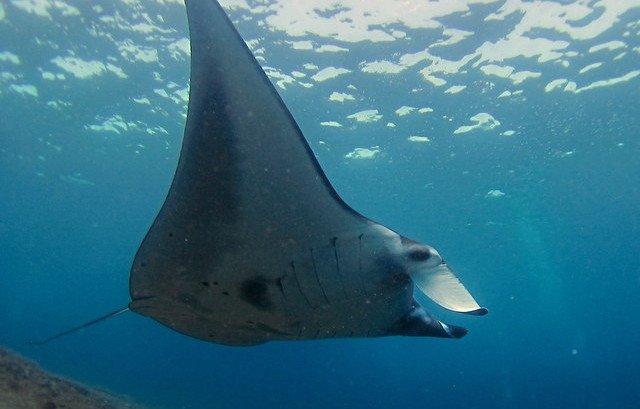
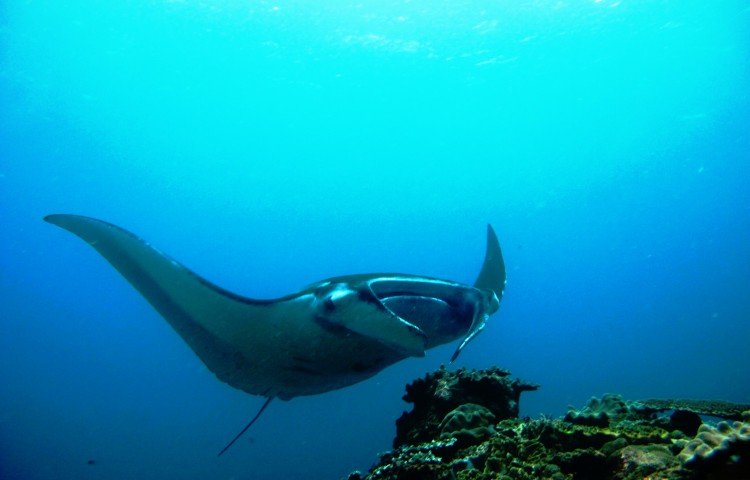
On the southeastern edge of Nusa Penida, safely tucked within a bay, lies a cleaning station shaped like a ten-meter stone mound. At around 3 meters deep near its summit, large manta rays gather in relatively high numbers to be cleaned of parasites by small fish. This dive is completely safe even for less experienced divers. Its maximum depth reaches 14 meters, and it offers a once-in-a-lifetime experience. The only challenge here might be the waves that rock you up and down, so it’s important to maintain good buoyancy, hold onto your jacket, and simply wait for the mantas to approach. Once you see them, resist overwhelming excitement and avoid touching or getting too close—otherwise, they will swim away and you may not see them again. The seabed at this site is composed of white limestone, but it doesn’t boast rich coral gardens. The main attraction here is the presence of mantas, mackerels, tunas, and occasionally other pelagic species.
For sensitive individuals, it’s not unusual to take the local pink “Kinedryl” motion sickness medicine before leaving Padang Bai to prevent seasickness during the journey.
Crystal Bay
Imagine a pristine bay with palm trees and white sand, situated at the entrance of the channel between the islands of Nusa Penida and Nusa Lembongan. It is well protected from currents, sheltering rich coral gardens beneath the surface that gradually transition into a steep slope. Along the slope, you’ll find several cleaning stations with cleaner wrasses, mainly used by sunfish (Mola Mola) during the season. If you haven’t seen them yet, visit this site during the summer months or early autumn. Due to the regular occurrence of strong currents at the channel entrance, the slope is covered only with low coral growth, but this is compensated by huge schools of fish waiting here for cold currents carrying their food. This means you should wear something warmer (5–7 mm wetsuit) and don’t forget a hood. The maximum dive depth is 30 meters, but this is recommended only for very experienced divers. Otherwise, stay within 20 meters and closely follow a guide familiar with local conditions. Caution is never too much here! Being swept into the channel by currents would complicate your dive. Before diving, make sure you have a decompression buoy with you. In the coral gardens, you can often encounter black-and-white striped sea snakes, scorpionfish, and frogfish.
The northern coast of Nusa Penida is lined with white beaches where local natives cultivate seaweed in the shallow waters. The shallows are covered with rich carpets of coral, and visibility here often reaches 20 meters or more. You’ll find easy sites where you can effortlessly drift with the current while observing coral fields at depths ranging from 3 to 30 meters. This location is suitable for all divers; try to work with the current and use it to your advantage during the dive. A decompression buoy is essential here as well.
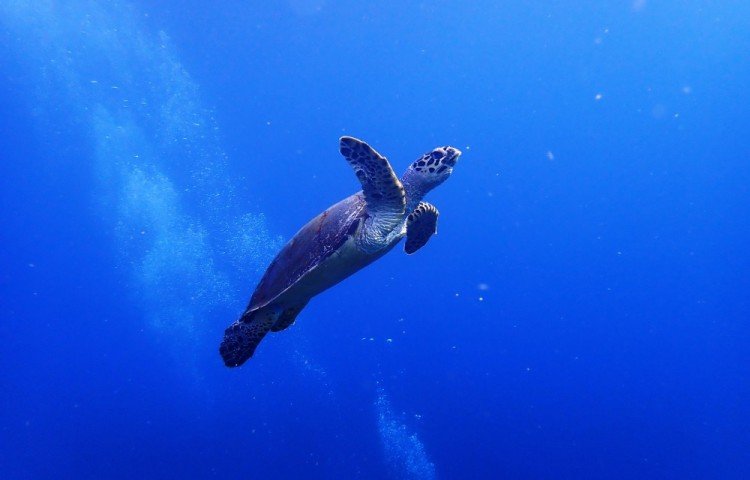
Tepekong islet, shaped somewhat like a tall hat, is known for its abundant sharks, large coral fish, and during the summer season, sunfish (Mola Mola). The seabed is enlivened by caves, but due to local currents, most coral growth is low-lying. For advanced and experienced divers, a very picturesque, rugged canyon awaits at depths of 30 to 40 meters on the island’s promontory. It’s arguably the most beautiful site, with an incredible atmosphere resembling an underwater stone amphitheater you might expect to find in Arizona.You’re almost guaranteed to encounter white-tip and black-tip sharks, schools of sweetlips, large moray eels, scorpionfish, and in shallower waters, turtles. However, be aware that the canyon is only accessible during periods of low currents and only with a guide who knows the site well.On the other side, the island is safe and attracts divers with its variety of fish and invertebrate species not found near the shore. Again, we recommend carrying a decompression buoy with you.
Just a 15-minute boat ride beyond Tepekong lies another small islet popular with divers. It primarily attracts enthusiasts of white-tip sharks, which rest in a cave about 8-10 meters deep. The cave is fairly spacious, with no stirring sediment on its floor, allowing up to 10 divers to comfortably fit inside. Due to its location, the island is exposed to strong currents, so coral growth is low, and divers need to seek shelter in the “lee” away from the currents.
This site is just a ten-minute boat ride from Padang Bai. It is an easy dive spot offering excellent opportunities for macro photography. The white sand covers the entire seabed, giving the water rich blue hues. The coral formations shelter many fish and invertebrates, providing protection during breeding. Sharp-eyed divers or local guides can help you spot species that are well camouflaged and use local hiding places. You will certainly find large scorpionfish, leaf scorpionfish, other frogfish, as well as stonefish and crocodile fish. Large cuttlefish often lay their eggs amidst the coral. This dive is suitable for all divers and especially appealing to photographers. Maximum depth ranges from 25 to 35 meters, but most of the life and joy can be found within the first 10 meters.
CHANNEL
This site, located directly beneath the entrance to Padang Bai harbor, is recommended for lovers of turtles and white-tip sharks. You will almost always encounter something you haven’t seen before. Rare species of scorpionfish and nudibranchs are examples of this. The channel drops to a depth of 30 meters, where sharks and rays hide under overhangs. There are no strong currents here, but avoid surfacing in the middle of the ferry route; instead, do so near the edge of the bay where boats navigate around the protruding reefs.
Menjangan is part of the national park on the western side of Bali island. It was originally known mainly for the presence of local deer, which gave it its name – Deer Island. The journey is not long, taking about 30 minutes by boat. Visibility here is often excellent, sometimes reaching up to 50 meters. However, from January to March, you may encounter large waves.The entire island is of limestone origin with a white sandy bottom. The dive sites offer easy and relaxed dives with abundant marine life and only mild currents. Large walls and coral terraces with good visibility provide plenty of soft corals and, above all, many healthy and rich gorgonians. These indicate that currents here are not very strong, and the amount of plankton and thus food for other fish – is sufficient. However, it is not the best place to encounter large pelagic animals.
Incroyable
Poklidná atmosféra, výhled na moře, bazén, výborné místní jídlo, potápění.

Naprosto výjimečné
Nejkrásnější dovolená díky personálu, čistota, výborné jídlo, organizace výletů a potápění.
Schönster Aufenthalt
Upgrade zur Villa, wunderschöner Meerblick, privater Pool, aufmerksames Personal, top Service.
Highly recommended
Everything! Beachfront, huge clean rooms, amazing pool, excellent food, kind staff, sunrise view, diving refresher.
Naprosto výjimečné
Přímý výhled na moře, šnorchlování zdarma, masáže a restaurace na místě.
Naprosto výjimečné
Jedinečný zážitek, výborné jídlo, masáže, výlety, milý provozovatelé.
Super schön!!
Private Lage mit Blick aufs Meer, engagierter Tauchbasis-Chef.
Absolutely perfect holiday
Sea view, location, clean rooms, private pool, open-air bathroom, excellent food and staff.
Naprosto výjimečné
Nádherná lokalita, vstřícný personál, indonéská i česká kuchyně, organizace výletů.
Naprosto výjimečné
Upgrade zur Villa, Infinity Pool, Zugang zum Strand, SPA, vielfältiges Essen, Frühstücksbuffet.
Exceptional
Warm welcome, lunch + 2 dives, reef and shipwreck, sunset mountain view, great family atmosphere.
Wonderful Stay in the North of Bali
Great hotel with amazing dive facilities
Herrlicher Familienurlaub! Ich vermisse mein Egg-Benedict!
Luxusvillen, günstiges und leckeres Essen, tolle Ausflüge, super Tauchteam, Massage top.
Tomuto resortu není co vytknout
Bylo nám nabídnuto ještě lepší ubytování než jsme měli objednané.
Exceptional stay
Loved everything. Great food, massage, diving, yoga, sunrise views, helpful staff.
Nádherná dovolená
Skvělý personál, krásná příroda, šnorchlování, výlety, spa, potápění.
Un fabuleux séjour
Piscine, chambre, venkovní koupelna s dostatkem soukromí.
Krásné místo a úžasný personál
Vše jak jsem si představovala, krásné místo a dokonalé ubytování.
Bel Hôtel !!! Relax quoi !!!
Skvělý personál, uvolněná atmosféra, úžasné potápění (zejména USS LIBERTY).
Relaxing place to unwind
Huge and clean rooms, peaceful, friendly and helpful staff, open bathroom concept.
Wir waren einfach nur begeistert und wären gerne länger geblieben.
Wunderschöne Villa, freundliches Personal, tolle Empfehlungen für Restaurants, sehr wohl gefühlt.
Nous avons été très bien accueillis et avons passé un très bon séjour
Personnel accueillant, ambiance familiale, chambre et équipements excellents.
Amazing beachfront hotel
Ocean views, friendly staff, excellent service, warm and genuine management.